

 STEM Learning and Learning Environments
  Broadening Participation in STEM
Equity in the Making: Investigating Spatial Arrangements of Makerspaces and Their Impact on Diverse User Populations
Effective Years: 2020-2026
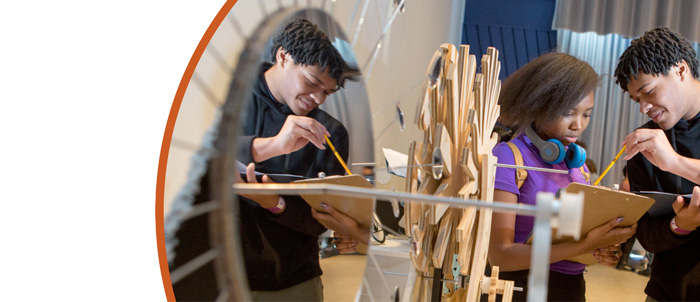
Makerspaces are places for hands on application of STEM concepts and skills. They are stocked with high-tech tools, supplies, and equipment, such as 3D printers, to support collaborative, creative work to build things. Given their potential to support STEM learning, makerspaces are increasingly integrated into universities across the country. However, if observers watched to see who decides to take advantage of a makerspace, they would see many students stick their heads in the door, look around, and leave. The observers would also likely note that disproportionately more of the students who decide to leave are from groups that are underrepresented in STEM. In this CAREER project, the researcher will examine the role that the spatial arrangement of a university makerspace plays in deterring and attracting diverse undergraduate participants. Broader impacts of the work include the potential to identify approaches to make STEM-rich learning environments more welcoming and inclusive. The researcher will investigate the emotional and affective responses that a university makerspace induces in potential users, and in turn examine approaches to re-design the arrangement of a university makerspace to attract participation of broad and diverse undergraduate communities. This qualitative, applied research program will employ interviews, surveys, and naturalistic inquiry-based quasi-experiments that are situated within physical and virtual environments. The guiding questions for the research include: What are the defining features of a university makerspace? What and who are involved in the design process? What is the rationale underlying these design decisions? To what extent does the spatial organization of a makerspace influence whether students, particularly those from underrepresented undergraduate communities, decide to use their university's makerspace? What design interventions are needed to spatially communicate that a makerspace is equitable and inclusive? The Faculty Early Career Development (CAREER) Program is a National Science Foundation (NSF)-wide activity that supports early-career faculty who have the potential to serve as academic role models in research and education. This CAREER project is supported by NSF's Education & Human Resources Directorate Core Research Program and its Improving Undergraduate STEM Education Program. This award reflects NSF's statutory mission and has been deemed worthy of support through evaluation using the Foundation's intellectual merit and broader impacts review criteria.
You are viewing a record from the ECR Projects database. Click here to search the ECR Projects Database or the ECR Publications Database.


