

The development of gender stereotypes about STEM abilities

This project advanced scientific understanding about children’s gender stereotypes about STEM and verbal abilities by synthesizing more than four decades of studies. The compiled data represented more than 145,000 children across ages 4 to 17. Additionally, the synthesis was international in scope, including data from 33 nations.
The results overturned some commonly accepted wisdom about these stereotypes. For instance, contrary to some prior conclusions, math stereotypes favoring male ability were minimal on average. The findings also indicated the need for future research on stereotypes that can negatively impact boys. For instance, girls were seen as far superior in verbal domains, such as reading and writing.
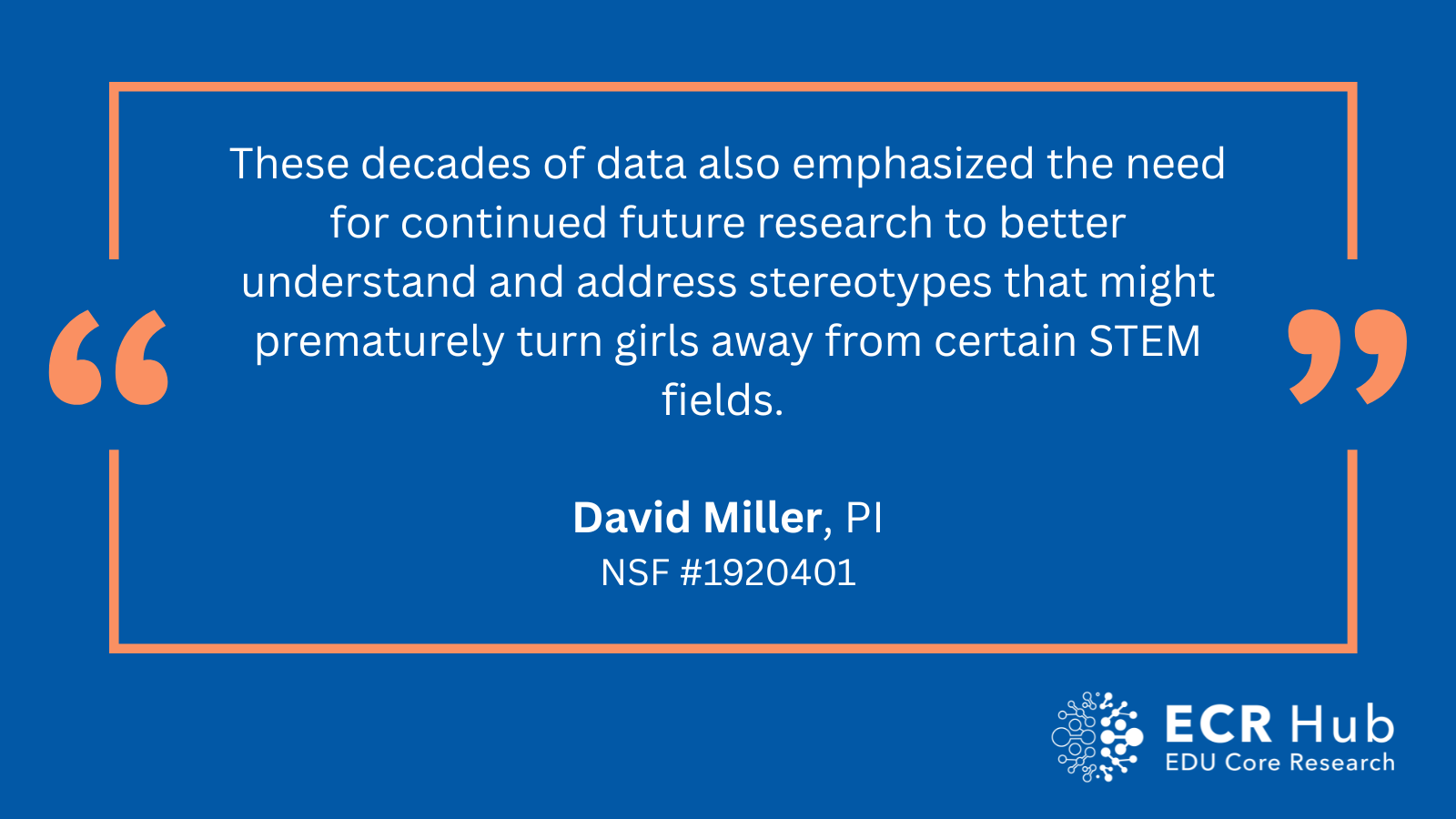
These decades of data also emphasized the need for continued future research to better understand and address stereotypes that might prematurely turn girls away from certain STEM fields. By age 6, children already saw boys as better than girls in computing and engineering. As girls aged, their male-STEM bias increased, which could potentially limit their future aspirations for fast-growing tech fields, such as artificial intelligence.
The results shone a light on a previously under-addressed problem: gender stereotypes specific to computer science and engineering. Prior initiatives for "girls in math" may have inadvertently detracted from this tech-focused problem.
See my Scientific American article.
No, it would not have been possible. We applied to the ECR:Core program precisely because of its unique focus on fundamental research. That focus aligned with our project's aim to better understand the problems for broadening girls' participation in STEM, so that future applied efforts can be more strategic. Though several federal programs support such applied efforts, including at NSF, very few support the kind of fundamental research pursued in our project.


