

Publications
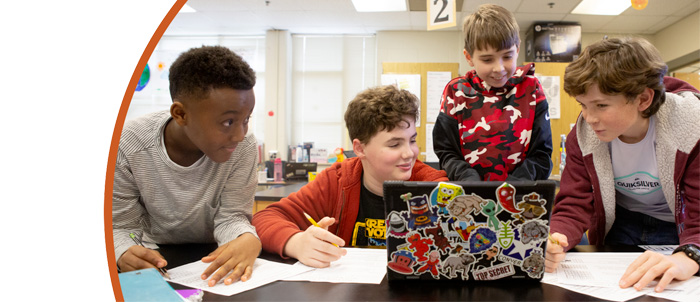
Across development, experience has a strong impact on the way we think and adapt. School experience affects academic and social-emotional outcomes, yet whether differences in pedagogical experience modulate underlying brain network development is still unknown. In this study, we compared the brain network dynamics of students with different pedagogical backgrounds. Specifically, we characterized the diversity and stability of brain activity at rest by combining both resting-state fMRI and diffusion-weighted structural imaging data of 87 4-18 years old students experiencing either the Montessori pedagogy (i.e., student-led, trial-and-error pedagogy) or the traditional pedagogy (i.e., teacher-led, test-based pedagogy). Our results revealed spatiotemporal brain dynamics differences between students as a function of schooling experience at the whole-brain level. Students from Montessori schools showed overall higher functional integration (higher system diversity) and neural stability (lower spatiotemporal diversity) compared to traditionally schooled students. Higher integration was explained mainly through the cerebellar (CBL) functional network. In contrast, higher temporal stability was observed in the ventral attention, dorsal attention, somatomotor, frontoparietal, and CBL functional networks. This study suggests a form of experience-dependent dynamic functional connectivity plasticity, in learning-related networks.
The visual modality is central to both reception and expression of human creativity. Creativity assessment paradigms, such as structured drawing tasks Barbot (2018), seek to characterize this key modality of creative ideation. However, visual creativity assessment paradigms often rely on cohorts of expert or naive raters to gauge the level of creativity of the outputs. This comes at the cost of substantial human investment in both time and labor. To address these issues, recent work has leveraged the power of machine learning techniques to automatically extract creativity scores in the verbal domain (e.g., SemDis; Beaty & Johnson 53, 757-780, 2021). Yet, a comparably well-vetted solution for the assessment of visual creativity is missing. Here, we introduce AuDrA - an Automated Drawing Assessment platform to extract visual creativity scores from simple drawing productions. Using a collection of line drawings and human creativity ratings, we trained AuDrA and tested its generalizability to untrained drawing sets, raters, and tasks. Across four datasets, nearly 60 raters, and over 13,000 drawings, we found AuDrA scores to be highly correlated with human creativity ratings for new drawings on the same drawing task (r = .65 to .81; mean = .76). Importantly, correlations between AuDrA scores and human raters surpassed those between drawings' elaboration (i.e., ink on the page) and human creativity raters, suggesting that AuDrA is sensitive to features of drawings beyond simple degree of complexity. We discuss future directions, limitations, and link the trained AuDrA model and a tutorial (https://osf.io/kqn9v/) to enable researchers to efficiently assess new drawings.
Semantic distance scoring provides an attractive alternative to other scoring approaches for responses in creative thinking tasks. In addition, evidence in support of semantic distance scoring has increased over the last few years. In one recent approach, it has been proposed to combine multiple semantic spaces to better balance the idiosyncratic influences of each space. Thereby, final semantic distance scores for each response are represented by a composite or factor score. However, semantic spaces are not necessarily equally weighted in mean scores, and the usage of factor scores requires high levels of factor determinacy (i.e., the correlation between estimates and true factor scores). Hence, in this work, we examined the weighting underlying mean scores, mean scores of standardized variables, factor loadings, weights that maximize reliability, and equally effective weights on common verbal creative thinking tasks. Both empirical and simulated factor determinacy, as well as Gilmer-Feldt's composite reliability, were mostly good to excellent (i.e., > .80) across two task types (Alternate Uses and Creative Word Association), eight samples of data, and all weighting approaches. Person-level validity findings were further highly comparable across weighting approaches. Observed nuances and challenges of different weightings and the question of using composites vs. factor scores are thoroughly provided.
The associative theory posits that creativity relates to people's ability to connect remote associations to form new ideas, based on the structure of their semantic memory. This theory has spurred several recent studies connecting semantic memory structure and associative thinking to creativity, capitalizing on advances in computational methods. To date, however, this research has almost exclusively focused on assessing creativity in the general population (e.g., assessed via divergent thinking tests), with far less work examining the role of associative thinking in eminently-creative individuals across the arts and sciences. Leveraging data collected as part of the Big-C Project-a sample of world-renowned visual artists (VIS) and scientists, and an intelligence-matched comparison group-we tested whether the ability to generate remote word associations differs as a function of creative expertise. Specifically, we used distributional semantic models to calculate the semantic distance of word associations across three conditions: a free association condition and two goal-directed conditions (common association and uncommon association). We found an interaction between domain expertise and association condition: while artists generated more distant associations overall, this effect was driven by substantially more distant responses in the free association condition. Our findings indicate that VIS spontaneously produce more remote associations-potentially due to a more interconnected semantic memory network structure-but that creative expertise is less relevant for producing associations that require goal-directed cognitive search. The findings are interpreted in the context of the ongoing debate on the domain-generality and domain-specificity of creativity.
Creativity has long been thought to involve associative processes in memory: connecting concepts to form ideas, inventions, and artworks. However, associa-tive thinking has been difficult to study due to limitations in modeling memory structure and retrieval processes. Recent advances in computational models of semantic memory allow researchers to examine how people navigate a se-mantic space of concepts when forming associations, revealing key search strat-egies associated with creativity. Here, we synthesize cognitive, computational, and neuroscience research on creativity and associative thinking. This Review highlights distinctions between free-and goal-directed association, illustrates the role of associative thinking in the arts, and links associative thinking to brain systems supporting both semantic and episodic memory - offering a new perspective on a longstanding creativity theory.
Dual process theories of creativity suggest that creative thought is supported by both a generation phase, where unconstrained ideas are generated and combined in novel ways, and an evaluation phase, where those ideas are filtered for usefulness in context. Neurocognitively, both the default mode network (DMN) and the executive control network (ECN) have been implicated in generation and evaluation, respectively. Importantly, generating and evaluating ideas implies that the same information, reflected in patterns of neural activity, must be present in both phases, suggesting that information should be 'reinstated' (i.e. multidimensional patterns must reappear) within and/or between network nodes. In the present study, we used representational similarity analysis (RSA) to investigate the extent to which nodes of the DMN and ECN reinstate information between a generation phase, in which participants generated novel or appropriate word associations to single nouns, and an evaluation phase, where we presented the associations back to participants to evaluate them. We showed strong evidence for reinstatement within the ECN dorsal lateral prefrontal cortex during the novel association task, and within the DMN medial prefrontal cortex during the appropriate association task. We additionally showed between network reinstatement between the ECN dorsal lateral prefrontal cortex and the DMN posterior parietal cortex during the novelty task. These results demonstrate the importance of both within- and between-informational reinstatement for generating and evaluating ideas, and implicate both the DMN and ECN in dual process models of creativity.
Creativity research commonly involves recruiting human raters to judge the originality of responses to divergent thinking tasks, such as the alternate uses task (AUT). These manual scoring practices have benefited the field, but they also have limitations, including labor-intensiveness and subjectivity, which can adversely impact the reliability and validity of assessments. To address these challenges, researchers are increasingly employing automatic scoring approaches, such as distributional models of semantic distance. However, semantic distance has primarily been studied in English-speaking samples, with very little research in the many other languages of the world. In a multilab study (N= 6,522 participants), we aimed to validate semantic distance on the AUT in 12 languages: Arabic, Chinese, Dutch, English, Farsi, French, German, Hebrew, Italian, Polish, Russian, and Spanish. We gathered AUT responses and human creativity ratings (N= 107,672 responses), as well as criterion measures for validation (e.g., creative achievement).We compared two deep learning-based semantic models—multilingual bidirectional encoder representations from transformers and cross-lingual language model RoBERTa—to compute semantic distance and validate this automated metric with human ratings and criterion measures. We found that the top-performing model for each language correlated positively with human creativity ratings, with correlations ranging from medium to large across languages. Regarding criterion validity, semantic distance showed small-to-moderate effect sizes (comparable to human ratings) for openness, creative behavior/achievement, and creative self-concept. We provide open access to our multilingual dataset for future algorithmic development, along with Python code to compute semantic distance in 12 languages. © 2023 American Psychological Association
Creative thinking is important for success in the fields of science, technology, engineering, and mathematics (STEM). Yet creativity in STEM is perhaps the most under-researched question in the creativity literature, with little known about the neurocognitive mechanisms supporting scientific creative thinking abilities, such as hypothesis generation. In the present functional magnetic resonance imaging study, undergraduate STEM majors (n = 47) completed a scientific hypothesis generation task (thinking of novel/plausible explanations for hypothetical scenarios) and a control task (thinking of synonyms to replace a word in a hypothetical scenario). Multivariate pattern analysis identified a whole-brain network supporting hypothesis generation, including hubs of the default (posterior cingulate cortex [PCC]), salience (right anterior insula [AI]), and semantic control (left inferior frontal gyrus [IFG]) networks. Using these network hubs as seed regions, we found increased between-network functional connectivity during hypothesis generation, including stronger coupling between semantic control (IFG) and posterior default regions (PCC and bilateral angular gyrus) and stronger coupling between salience (AI) and default regions, alongside weaker within-network functional connectivity. Our results indicate that scientific creative thinking involves increased cooperation among the default, salience, and control networks-similar to creative thinking in other domains-potentially reflecting a coordination of spontaneous/generative and controlled/evaluative processes to construct original explanations for scientific phenomena.
Openness to Experience is most strongly related to aspects of high-level cognition, such as creativity. Yet, the role of cognitive capacities in Openness is still far from understood. We examine how individuals search their memory predicts levels of Openness. Participants (N = 163) had one minute to generate synonyms to the word hot, which operationalizes mental navigation through a multidimensional representation of the mental lexicon - a cognitive multiplex network. We find high accuracy in low- and high- Openness group classification, and good prediction of individual differences in Openness. These results support the use of computational cognitive modelling for the study of personality traits. Further, our results suggest that people high in Openness engage in a distinct style of cognitive search.
Music is a complex system consisting of many dimensions and hierarchically organized information-the or-ganization of which, to date, we do not fully understand. Network science provides a powerful approach to representing such complex systems, from the social networks of people to modelling the underlying network structures of different cognitive mechanisms. In the present research, we explored whether network science methodology can be extended to model the melodic patterns underlying expert improvised music. Using a large corpus of transcribed improvisations, we constructed a network model in which 5-pitch sequences were linked depending on consecutive occurrences, constituting 116,403 nodes (sequences) and 157,429 edges connecting them. We then investigated whether mathematical graph modelling relates to musical characteristics in real -world listening situations via a behavioral experiment paralleling those used to examine language. We found that as melodic distance within the network increased, participants judged melodic sequences as less related. Moreover, the relationship between distance and reaction time (RT) judgements was quadratic: participants slowed in RT up to distance four, then accelerated; a parallel finding to research in language networks. This study offers insights into the hidden network structure of improvised tonal music and suggests that humans are sen-sitive to the property of melodic distance in this network. More generally, our work demonstrates the similarity between music and language as complex systems, and how network science methods can be used to quantify different aspects of its complexity.


