

Publications
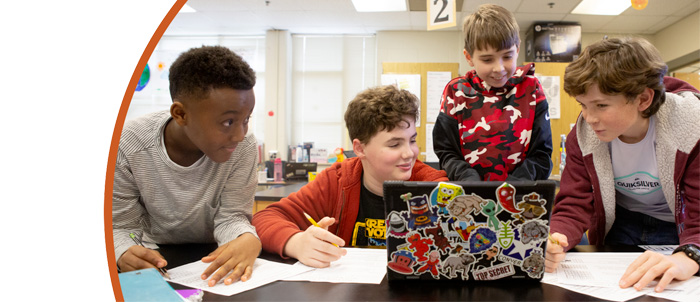
Fostering creative minds has always been a premise to ensure adaptation to new challenges of human civilization. While some alternative educational settings (i.e., Montessori) were shown to nurture creative skills, it is unknown how they impact underlying brain mechanisms across the school years. This study assessed creative thinking and resting-state functional connectivity via fMRI in 75 children (4-18 y.o.) enrolled either in Montessori or traditional schools. We found that pedagogy significantly influenced creative performance and underlying brain networks. Replicating past work, Montessori-schooled children showed higher scores on creative thinking tests. Using static functional connectivity analysis, we found that Montessori-schooled children showed decreased within-network functional connectivity of the salience network. Moreover, using dynamic functional connectivity, we found that traditionally-schooled children spent more time in a brain state characterized by high intra-default mode network connectivity. These findings suggest that pedagogy may influence brain networks relevant to creative thinking-particularly the default and salience networks. Further research is needed, like a longitudinal study, to verify these results given the implications for educational practitioners. Research HighlightsMost executive jobs are prospected to be obsolete within several decades, so creative skills are seen as essential for the near future.School experience has been shown to play a role in creativity development, however, the underlying brain mechanisms remained under-investigated yet.Seventy-five 4-18 years-old children, from Montessori or traditional schools, performed a creativity task at the behavioral level, and a 6-min resting-state MR scan.We uniquely report preliminary evidence for the impact of pedagogy on functional brain networks.
Complex cognitive processes, like creative thinking, rely on interactions among multiple neurocognitive processes to generate effective and innovative behaviors on demand, for which the brain’s connector hubs play a crucial role. However, the unique contribution of specific hub sets to creative thinking is unknown. Employing three functional magnetic resonance imaging datasets (total N= 1,911), we demonstrate that connector hub sets are organized in a hierarchical manner based on diversity, with “control-default hubs”—which combine regions from the frontoparietal control and default mode networks—positioned at the apex. Specifically, control-default hubs exhibit the most diverse resting-state connectivity profiles and play the most substantial role in facilitating interactions between regions with dissimilar neurocognitive functions, a phenomenon we refer to as “diverse functional interaction”. Critically, we found that the involvement of control-default hubs in facilitating diverse functional interaction robustly relates to creativity, explaining both task-induced functional connectivity changes and individual creative performance. Our findings suggest that control-default hubs drive diverse functional interaction in the brain, enabling complex cognition, including creative thinking. We thus uncover a biologically plausible explanation that further elucidates the widely reported contributions of certain frontoparietal control and default mode network regions in creativity studies. © The Author(s) 2023. Published by Oxford University Press. All rights reserved.
Human ratings are ubiquitous in creativity research. Yet, the process of rating responses to creativity tasks - typically several hundred or thousands of responses, per rater - is often time-consuming and expensive. Planned missing data designs, where raters only rate a subset of the total number of responses, have been recently proposed as one possible solution to decrease overall rating time and monetary costs. However, researchers also need ratings that adhere to psychometric standards, such as a certain degree of reliability, and psychometric work with planned missing designs is currently lacking in the literature. In this work, we introduce how judge response theory and simulations can be used to fine-tune planning of missing data designs. We provide open code for the community and illustrate our proposed approach by a cost-effectiveness calculation based on a realistic example. We clearly show that fine-tuning helps to save time (to perform the ratings) and monetary costs, while simultaneously targeting expected levels of reliability.
Empathy research has long emphasized accuracy when imagining other minds. We explore whether empathy can be a creative process, where people think of multiple diverging possibilities of others' experiences. We developed two tasks to measure creative empathy. First, we adapted forward flow to measure the dynamic unfolding of creativity while imagining other minds, quantified as semantic distance between mental state concepts when freely associating the contents of other minds. Second, we developed a divergent thinking task where participants reflect on others' mental states and responses are scored using subjective and automated methods. In Studies 1-3, participants instructed to be creative showed higher scores than those instructed to be accurate and a no-instruction control, demonstrating that people vary in how creatively they approach empathy. In Study 4, participants instructed to be empathic (vs. objective) toward a target showed greater creativity on the divergent thinking task, demonstrating that empathy can produce creativity. Creativity on these tasks were inconsistently associated with trait and state empathy measures, suggesting complex relationships between creative empathy and empathic outcomes. Overall, these findings support a novel approach to measuring empathy that accounts for creative processes, broadening the scope of empathy and creativity research.
Existing research has consistently supported a relationship between creative achievement and specific personality traits (e.g. openness to experience). However, such work has largely focused on univariate associations, potentially obscuring complex interactions among multiple personality factors, rendering an incomplete picture of the creative personality. We applied a psychometric network approach to characterize the multidimensional personality structure of highly creative individuals in the arts (artists) and sciences (scientists), using data from three samples (N = 4,015): college students, a representative adult sample, and the Big-C project of eminent creative professionals. Replicating past work, we found that artists showed reliably higher levels of openness to experience compared to scientists and a control group of less creative people. Psychometric network analysis revealed that artists were characterized by higher connectivity (i.e. co-occurrence) with other personality traits for openness, indicating that openness may be more heterogeneous in how it co-occurs with other personality traits in highly creative people. Across all three samples, we found that the scientists' personality network structure was more cohesive than the personality network of artists and the control group, indicating greater homogeneity in the personality characteristics of scientists. Our findings uncover a constellation of traits that give rise to creative achievement in the arts and sciences.
Creativity research commonly involves recruiting human raters to judge the originality of responses to divergent thinking tasks, such as the alternate uses task (AUT). These manual scoring practices have benefited the field, but they also have limitations, including labor-intensiveness and subjectivity, which can adversely impact the reliability and validity of assessments. To address these challenges, researchers are increasingly employing automatic scoring approaches, such as distributional models of semantic distance. However, semantic distance has primarily been studied in English-speaking samples, with very little research in the many other languages of the world. In a multilab study (N= 6,522 participants), we aimed to validate semantic distance on the AUT in 12 languages: Arabic, Chinese, Dutch, English, Farsi, French, German, Hebrew, Italian, Polish, Russian, and Spanish. We gathered AUT responses and human creativity ratings (N= 107,672 responses), as well as criterion measures for validation (e.g., creative achievement).We compared two deep learning-based semantic models—multilingual bidirectional encoder representations from transformers and cross-lingual language model RoBERTa—to compute semantic distance and validate this automated metric with human ratings and criterion measures. We found that the top-performing model for each language correlated positively with human creativity ratings, with correlations ranging from medium to large across languages. Regarding criterion validity, semantic distance showed small-to-moderate effect sizes (comparable to human ratings) for openness, creative behavior/achievement, and creative self-concept. We provide open access to our multilingual dataset for future algorithmic development, along with Python code to compute semantic distance in 12 languages. © 2023 American Psychological Association
The associative theory of creativity has long held that creative thinking involves connecting remote concepts in semantic memory. Network science tools have recently been applied to map the organization of concepts in semantic memory, and to study the link between semantic memory and creativity. Yet such work has largely overlooked the domain of convergent thinking, despite the theoretical importance of semantic memory networks for facilitating associative processes relevant for convergent problem solving (e.g., spreading activation). Convergent thinking problems, such as the Compound Remote Associates (CRA) test, can be solved with insight (the sudden aha experience) or analysis (deliberately and incrementally working towards the solution). In a sample of 477 participants, we adopted network science methods to compare semantic memory structure across two grouping variables: 1) convergent thinking ability (i.e., CRA accuracy), and 2) the self-reported tendency to solve problems with insight or analysis. Semantic memory networks were constructed from a semantic fluency task, and problem solving style (insight or analysis) was determined from judgments provided during solving of CRAs. We found that, compared to the low-convergent thinking group, the high-convergent thinking group exhibited a more flexible and interconnected semantic network-with short paths and many connections between concepts. Moreover, participants who primarily solved problems with insight (compared to analysis) showed shorter average path distances between concepts, even after controlling for accuracy. Our results extend the literature on semantic memory and creativity, and suggest that the organization of semantic memory plays a key role in convergent thinking, including insight problem solving.
Creativity has long been thought to involve associative processes in memory: connecting concepts to form ideas, inventions, and artworks. However, associa-tive thinking has been difficult to study due to limitations in modeling memory structure and retrieval processes. Recent advances in computational models of semantic memory allow researchers to examine how people navigate a se-mantic space of concepts when forming associations, revealing key search strat-egies associated with creativity. Here, we synthesize cognitive, computational, and neuroscience research on creativity and associative thinking. This Review highlights distinctions between free-and goal-directed association, illustrates the role of associative thinking in the arts, and links associative thinking to brain systems supporting both semantic and episodic memory - offering a new perspective on a longstanding creativity theory.
Dual process theories of creativity suggest that creative thought is supported by both a generation phase, where unconstrained ideas are generated and combined in novel ways, and an evaluation phase, where those ideas are filtered for usefulness in context. Neurocognitively, both the default mode network (DMN) and the executive control network (ECN) have been implicated in generation and evaluation, respectively. Importantly, generating and evaluating ideas implies that the same information, reflected in patterns of neural activity, must be present in both phases, suggesting that information should be 'reinstated' (i.e. multidimensional patterns must reappear) within and/or between network nodes. In the present study, we used representational similarity analysis (RSA) to investigate the extent to which nodes of the DMN and ECN reinstate information between a generation phase, in which participants generated novel or appropriate word associations to single nouns, and an evaluation phase, where we presented the associations back to participants to evaluate them. We showed strong evidence for reinstatement within the ECN dorsal lateral prefrontal cortex during the novel association task, and within the DMN medial prefrontal cortex during the appropriate association task. We additionally showed between network reinstatement between the ECN dorsal lateral prefrontal cortex and the DMN posterior parietal cortex during the novelty task. These results demonstrate the importance of both within- and between-informational reinstatement for generating and evaluating ideas, and implicate both the DMN and ECN in dual process models of creativity.


