

Publications
The nurturing of learners’ ways of knowing is vital for supporting their intellectual growth and their participation in democratic knowledge societies. This paper traces the development of two interrelated theoretical frameworks that describe the nature of learners’ epistemic thinking and performance and how education can support epistemic growth: the AIR and Apt-AIR frameworks. After briefly reviewing these frameworks, we discuss seven reflections on educational theory development that stem from our experiences working on the frameworks. First, we describe how our frameworks were motivated by the goal of addressing meaningful educational challenges. Subsequently, we explain why and how we infused philosophical insights into our frameworks, and we also discuss the steps we took to increase the coherence of the frameworks with ideas from other educational psychology theories. Next, we reflect on the important role of the design of instruction and learning environments in testing and elaborating the frameworks. Equally important, we describe how our frameworks have been supported by empirical evidence and have provided an organizing structure for understanding epistemic performance exhibited in studies across diverse contexts. Finally, we discuss how the development of the frameworks has been spurred by dialogue within the research community and by the need to address emerging and pressing real-world challenges. To conclude, we highlight several important directions for future research. A common thread running through our work is the commitment to creating robust and dynamic theoretical frameworks that support the growth of learners’ epistemic performance in diverse educational contexts. © The Author(s) 2024.
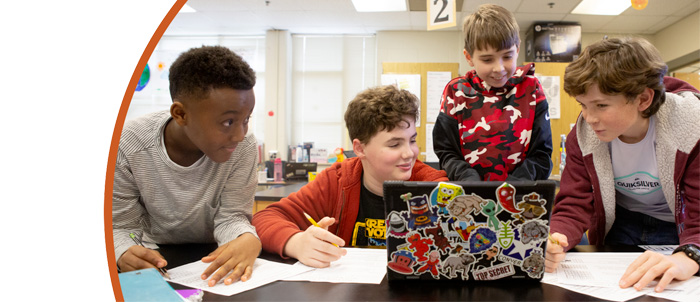
Disagreement is often perceived negatively, yet it can be beneficial for learning and scientific inquiry. However, students tend to avoid engaging in disagreement. Peer critique activities offer a promising way to encourage students to embrace disagreement, which supports learning as students articulate their ideas, making them available for discussion, revision, and refinement. This study aims to better understand how students express disagreement during peer critique within small groups and how that affects moving their inquiry forward. It explores 5th-grade students' management of disagreement within a computer-supported collaborative modeling environment. Using conversation analysis, we identified various forms of disagreements employed by students when engaging with different audiences. We observed a tendency for students to disagree softly; that is, disagreement was implied and/or mitigated. Students' resolution of both direct and soft disagreements effectively promoted their collective knowledge advancement, including building shared scientific understanding and improving their models, while maintaining a positive socio-emotional climate. These findings have implications for designing CSCL environments with respect to supporting students in providing and responding to peer critiques at the group level.
IntroductionThis study reports on a classroom intervention where upper-elementary students and their teacher explored the biological phenomena of eutrophication using the Modeling and Evidence Mapping (MEME) software environment and associated learning activities. The MEME software and activities were designed to help students create and refine visual models of an ecosystem based on evidence about the eutrophication phenomena. The current study examines how students utilizing this tool were supported in developing their mechanistic reasoning when modeling complex systems. We ask the following research question: How do designed activities within a model-based software tool support the integrations of complex systems thinking and the practice of scientific modeling for elementary students? MethodsThis was a design-based research (DBR) observational study of one classroom. A new mechanistic reasoning coding scheme is used to show how students represented their ideas about mechanisms within their collaboratively developed models. Interaction analysis was then used to examine how students developed their models of mechanism in interaction. ResultsOur results revealed that students' mechanistic reasoning clearly developed across the modeling unit they participated in. Qualitative coding of students' models across time showed that students' mechanisms developed from initially simplistic descriptions of cause and effect aspects of a system to intricate connections of how multiple entities within a system chain together in specific processes to effect the entire system. Our interaction analysis revealed that when creating mechanisms within scientific models students' mechanistic reasoning was mediated by their interpretation/grasp of evidence, their collaborative negotiations on how to link evidence to justify their models, and students' playful and creative modeling practices that emerged in interaction. DiscussionIn this study, we closely examined students' mechanistic reasoning that emerge in their scientific modeling practices, we offer insights into how these two theoretical frameworks can be effectively integrated in the design of learning activities and software tools to better support young students' scientific inquiry. Our analysis demonstrates a range of ways that students represent their ideas about mechanism when creating a scientific model, as well as how these unfold in interaction. The rich interactional context in this study revealed students' mechanistic reasoning around modeling and complex systems that may have otherwise gone unnoticed, suggesting a need to further attend to interaction as a unit of analysis when researching the integration of multiple conceptual frameworks in science education.
Events worldwide have heightened concerns that education is failing to prepare students for a “post-truth” world. A core “post-truth” challenge is the prevalence of deep epistemic disagreements: people fundamentally disagree about appropriate ways of knowing. We provide a new analysis of deep epistemic disagreements and propose an educational response based on the Apt-AIR framework of the goals of epistemic education. An apt response to deep epistemic disagreements requires that people develop individual and collective abilities to make epistemic assumptions visible, to justify and negotiate these assumptions, and to develop shared commitments to appropriate standards and processes of reasoning. To develop these meta-epistemic abilities, we propose a cluster of instructional practices and principles called explorations into knowing. We discuss empirical research showing that teachers and students can meaningfully engage in explorations into knowing and productively discuss their deep epistemic disagreements. These proposals lead to new research directions. © 2020 Division 15, American Psychological Association.


