

Publications
Price differentials, among other factors, persuade many residents of Northern Mexico to shop in the Southwestern United States border region. Employment patterns in the latter region are studied using a set of control variables and two indicators that are likely to influence cross-border shopping patterns. The first is a real exchange rate index, which captures changes in relative prices in the United States and Mexico. The second is real per capita gross state product in Mexican states adjacent to the international boundary. Both of these variables are found to impact retail and restaurant employment in the United States border zone, confirming that cross-border shopping influences labor market conditions in that region. Furthermore, the estimated elasticities vary across retail sub-sectors in ways that are generally consistent with prior research. Overall, the results suggest that economic setbacks in Northern Mexico and real peso depreciations are likely to have adverse consequences for important sectors of border economies in the United States.
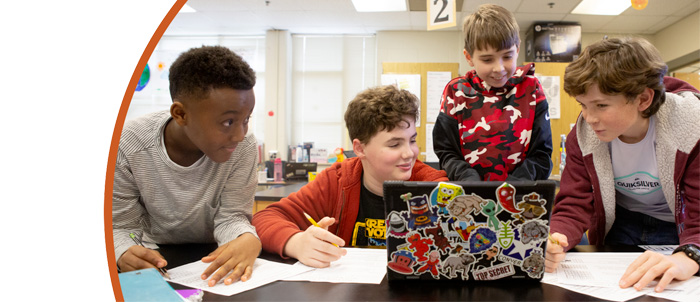
Multiparty collaborative problem solving-an increasingly important context in the 21st century workforce-suffers from a degradation of social and behavioral signals when attempted remotely, resulting in suboptimal outcomes. We investigate teams' multidimensional patterns of visual attention during a collaborative problem-solving task with an eye for leveraging insights to improve collaborative interfaces. Fifty-seven novices (forming 19 triads) engaged in a challenging programming task (Minecraft Hour of Code) using videoconferencing software with screen sharing. To discover patterns of individual-level gaze-UI coupling (coordination of a teammate's attention with respect to changes in the user interface) and team-level gaze-UI regularity (dynamics of teams' collective attention in context with changes in the user interface), we applied cross- and multidimensional recurrence quantification analyses, respectively. Individuals' eye gaze was significantly coupled with the ongoing screen activity whereas teams displayed significant patterns of gaze regularity, suggesting repetitive patterns in teams' attention. These measures predicted expert-coded collaborative processes of constructing shared knowledge and negotiation and coordination (but not maintaining team function) and correlated with task score (r = .425). They also predicted individually assessed subjective perceptions of team performance and the collaboration process, but not individual's learning or team's task scores. We discuss implications of our findings for the design of intelligent collaborative interfaces.
Scientific computing has become an area of growing importance. Across fields such as biology, education, physics, or others, people are increasingly using scientific computing to model and understand the world around them. Despite the clear need, almost no systematic analysis has been conducted on how students in fields outside of computer science learn to program in the context of scientific computing. Given that many fields do not explicitly teach much programming to their students, they may have to learn this important skill on their own. To help, using rigorous quantitative and qualitative methods, we looked at the process 154 students followed in the context of a randomized controlled trial on alternative styles of programming that can be used in R. Our results suggest that the barriers students face in scientific computing are non-trivial and this work has two core implications: 1) students learning scientific computing on their own struggle significantly in many different ways, even if they have had prior programming training, and 2) the design of the current generation of scientific computing feels like the wild-wild west and the designs can be improved in ways we will enumerate.
While text-to-speech software has largely made textual information accessible in the digital space, analogous access to graphics still remains an unsolved problem. Because of their portability and ubiquity, several studies have alluded to touchscreens as a potential platform for such access, yet there is still a gap in our understanding of multimodal information transfer in the context of graphics. The current research demonstrates feasibility for following lines, a fundamental graphical concept, via vibrations and sounds on commercial touchscreens. Two studies were run with 21 blind and visually impaired participants (N = 12; N= 9). The first study examined the presentation of straight, linear lines using a multitude of line representations, such as vibration-only, auditory-only, vibration lines with auditory borders, and auditory lines with vibration borders. The results of this study demonstrated that both auditory and vibratory bordered lines were optimal for precise tracing, although both vibration- and auditory-only lines were also sufficient for following, with minimal deviations. The second study examined the presentation of curving, non-linear lines. Conditions differed on the number of auditory reference points presented at the inflection and deflection points. Participants showed minimal deviation from the lines during tracing, performing nearly equally in both 1- and 3-point conditions. From these studies, we demonstrate that line following via multimodal feedback is possible on touchscreens, and we present guidelines for the presentation of such non-visual graphical concepts.
A prominent issue faced by the education research community is that of student attrition. While large research efforts have been devoted to studying course-level attrition, widely referred to as dropout, less research has been focused on finer-grained assignment-level attrition commonly observed in K-12 classrooms. This later instantiation of attrition, referred to in this paper as stopout, is characterized by students failing to complete their assigned work, but the cause of such behavior are not often known. This becomes a large problem for educators and developers of learning platforms as students who give up on assignments early are missing opportunities to learn and practice the material which may affect future performance on related topics; similarly, it is difficult for researchers to develop, and subsequently difficult for computer-based systems to deploy interventions aimed at promoting productive persistence once a student has ceased interaction with the software. This difficulty highlights the importance to understand and identify early signs of stopout behavior in order to provide aid to students pre-emptively to promote productive persistence in their learning. While many cases of student stopout may be attributable to gaps in student knowledge and indicative of struggle, student attributes such as grit and persistence may be further affected by other factors. This work focuses on identifying different forms of stopout behavior in the context of middle school math by observing student behaviors at the sub-problem level. We find that students exhibit disproportionate stopout on the first problem of their assignments in comparison to stopout on subsequent problems, identifying a behavior that we call refusal, and use the emerging patterns of student activity to better understand the potential causes underlying stopout behavior early in an assignment.
Informed by cognitive theories of learning, this work examined how students' self-reported study patterns (spacing vs. cramming) corresponded to their engagement with the Learning Management System (LMS) across two years in a large biology course. We specifically focused on how students accessed non-mandatory resources (lecture videos, lecture slides) and considered whether this pattern differed by underrepresented minority (URM) status. Overall, students who self-reported utilizing spacing strategies throughout the course had higher grades than students who reported cramming throughout the course. When examining LMS engagement, only a small percentage of students accessed the lecture videos and lecture slides. Applying a negative binomial regression model to daily counts of click activities, we also found that students who utilized spacing strategies accessed LMS resources more often but not earlier before major deadlines. Moreover, this finding was not different for underrepresented students. Our results provide some initial evidence showing how spacing behaviors correspond to accessing learning resources. However, given the lack of general engagement with LMS resources, our results underscore the value of encouraging students to utilize these resources when studying course material.
We adopt a multimodal approach to investigating team interactions in the context of remote collaborative problem solving (CPS). Our goal is to understand multimodal patterns that emerge and their relation with collaborative outcomes. We measured speech rate, body movement, and galvanic skin response from 101 triads (303 participants) who used video conferencing software to collaboratively solve challenging levels in an educational physics game. We use multi-dimensional recurrence quantification analysis (MdRQA) to quantify patterns of team-level regularity, or repeated patterns of activity in these three modalities. We found that teams exhibit significant regularity above chance baselines. Regularity was unaffected by task factors. but had a quadratic relationship with session time in that it initially increased but then decreased as the session progressed. Importantly, teams that produce more varied behavioral patterns (irregularity) reported higher emotional valence and performed better on a subset of the problem solving tasks. Regularity did not predict arousal or subjective perceptions of the collaboration. We discuss implications of our findings for the design of systems that aim to improve collaborative outcomes by monitoring the ongoing collaboration and intervening accordingly.
Collaborative problem solving (CPS) is a crucial 21st century skill; however, current technologies fall short of effectively supporting CPS processes, especially for remote, computer-enabled interactions. In order to develop next-generation computer-supported collaborative systems that enhance CPS processes and outcomes by monitoring and responding to the unfolding collaboration, we investigate automated detection of three critical CPS process – construction of shared knowledge, negotiation/coordination, and maintaining team function – derived from a validated CPS framework. Our data consists of 32 triads who were tasked with collaboratively solving a challenging visual computer programming task for 20 minutes using commercial videoconferencing software. We used automatic speech recognition to generate transcripts of 11,163 utterances, which trained humans coded for evidence of the above three CPS processes using a set of behavioral indicators. We aimed to automate the trained human-raters’ codes in a team-independent fashion (current study) in order to provide automatic real-time or offline feedback (future work). We used Random Forest classifiers trained on the words themselves (bag of n-grams) or with word categories (e.g., emotions, thinking styles, social constructs) from the Linguistic Inquiry Word Count (LIWC) tool. Despite imperfect automatic speech recognition, the n-gram models achieved AUROC (area under the receiver operating characteristic curve) scores of .85, .77, and .77 for construction of shared knowledge, negotiation/coordination, and maintaining team function, respectively; these reflect 70%, 54%, and 54% improvements over chance. The LIWC-category models achieved similar scores of .82, .74, and .73 (64%, 48%, and 46% improvement over chance). Further, the LIWC model-derived scores predicted CPS outcomes more similar to human codes, demonstrating predictive validity. We discuss embedding our models in collaborative interfaces for assessment and dynamic intervention aimed at improving CPS outcomes. Copyright © ACM
The basis for understanding neurophysiology is understanding ion movement across cell membranes. Students in introductory courses recognize ion concentration gradients as a driving force for ion movement but struggle to simultaneously account for electrical charge gradients. We developed a 17-multiple-choice item assessment of students' understanding of electrochemical gradients and resistance in neurophysiology, the Electrochemical Gradients Assessment Device (EGAD). We investigated the internal evidence validity of the assessment by analyzing item characteristic curves of score probability and student ability for each question. and a Wright map of student scores and ability. We used linear mixed-effect regression to test student performance and ability. Our assessment discriminated students with average ability (weighted likelihood estimate: -2 to 1.5 Theta); however, it was not as effective at discriminating students at the highest ability (weighted likelihood estimate: >2 Theta). We determined the assessment could capture changes in both assessment scores (model r(2) = 0.51, P < 0.001, n = 444) and ability estimates (model r(2) = 0.47, P < 0.001, n = 444) after a simulation-based laboratory and course instruction for 222 students. Differential item function analysis determined that each item on the assessment performed equitably for all students, regardless of gender, race/ethnicity, or economic status. Overall, we found that men scored higher (r(2) = 0.51, P = 0.014, n = 444) and bad higher ability scores (P = 0.003) on the EGAD assessment. Caucasian students of both genders were positively correlated with score (r(2) = 0.51, P < 0.001, n = 444) and ability (r(2) = 0.47, P < 0.001, n = 444). Based on the evidence gathered through our analyses, the scores obtained from the EGAD can distinguish between levels of content knowledge on neurophysiology principles for students in introductory physiology courses.
Social networks represent two different facets of social life: (1) stable paths for diffusion, or the spread of something through a connected population, and (2) random draws from an underlying social space, which indicate the relative positions of the people in the network to one another. The dual nature of networks creates a challenge: if the observed network ties are a single random draw, is it realistic to expect that diffusion only follows the observed network ties? This study takes a first step toward integrating these two perspectives by introducing a social space diffusion model. In the model, network ties indicate positions in social space, and diffusion occurs proportionally to distance in social space. Practically, the simulation occurs in two parts. First, positions are estimated using a statistical model (in this example, a latent space model). Then, second, the predicted probabilities of a tie from that model-representing the distances in social space-or a series of networks drawn from those probabilities-representing routine churn in the network-are used as weights in a weighted averaging framework. Using longitudinal data from high school friendship networks, the author explores the properties of the model. The author shows that the model produces smoothed diffusion results, which predict attitudes in future waves 10 percent better than a diffusion model using the observed network and up to 5 percent better than diffusion models using alternative, non-model-based smoothing approaches.


